Cameron Lange · 6 September 2026
The Interplay Between Community Feedback Systems and Listing Accuracy in Modern Home Platforms Reveals Patterns Worth Examining Closely
Modern home platforms rely on community feedback systems that collect ratings, reviews, and reports from users who interact with property listings, and these mechanisms directly influence how accurately hosts and agents maintain their descriptions over time. Data from multiple platforms shows that listings with consistent review activity tend to feature fewer factual errors in areas such as square footage, amenities, and neighborhood details, while those without regular feedback often retain outdated information for longer periods.
How Feedback Mechanisms Operate on Home Platforms
Users submit ratings on specific aspects like cleanliness, location accuracy, and equipment functionality after a stay or viewing, and platforms aggregate these inputs into overall scores that appear alongside each listing. Algorithms then flag entries where review mentions of missing features or incorrect details reach a certain threshold, prompting hosts to verify or correct the information. Researchers at institutions across North America and Europe have tracked these processes and found that automated prompts generated from feedback lead to updates in roughly 40 percent of cases within the first month of detection.
Community reports also extend beyond simple star ratings because many systems allow text-based comments that reference exact discrepancies, such as a listed parking space that does not exist or an advertised pool that remains closed seasonally. Platforms integrate these comments into backend tools that notify property managers, and the resulting corrections improve search relevance for future users. According to figures released by the Australian Competition and Consumer Commission in early 2026, platforms that prioritize rapid response to feedback reports experience measurable gains in listing reliability metrics compared with those that process updates more slowly.
Patterns Linking Feedback Volume to Listing Corrections
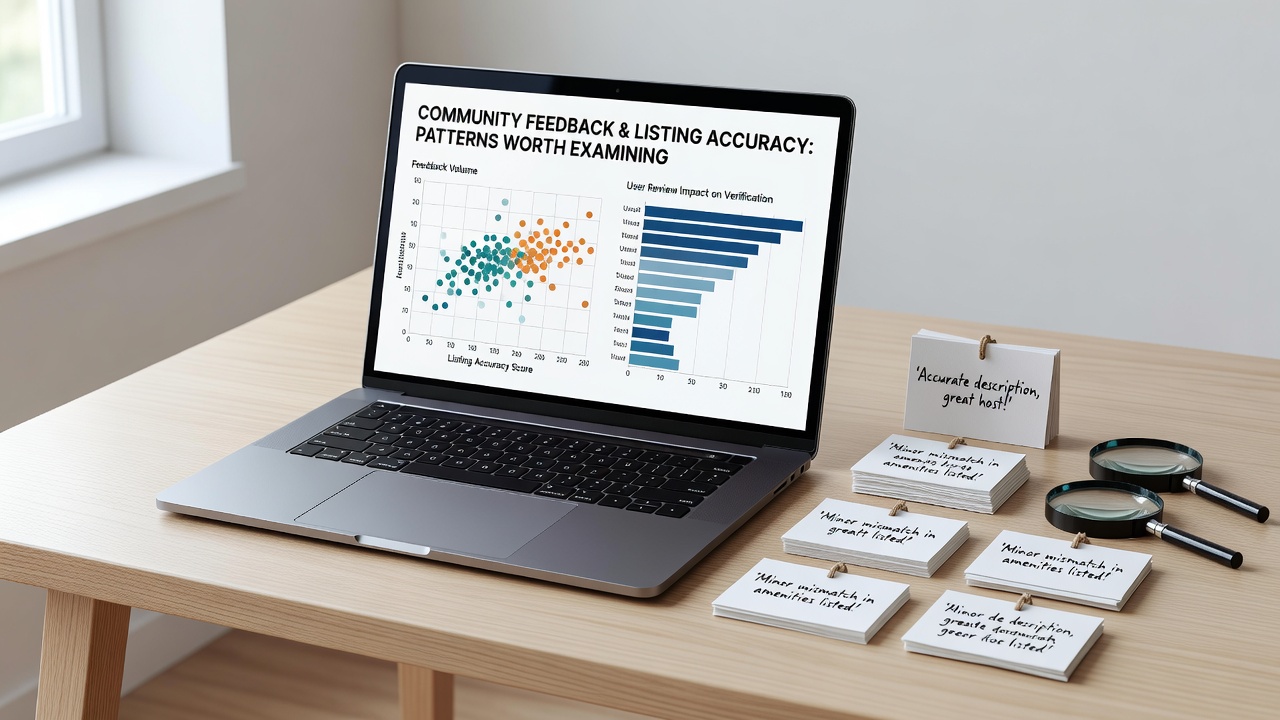
High-volume feedback correlates with faster identification of inaccuracies because repeated mentions of the same issue create statistical signals that stand out from isolated comments. Listings in popular urban markets receive enough reviews each quarter to trigger these signals regularly, whereas rural or seasonal properties often accumulate feedback more slowly and retain errors longer. Observers note that September 2026 brought increased scrutiny to this gap when several regional tourism boards published reports showing seasonal properties lagging behind urban ones in update frequency by an average of 18 days.
Feedback systems further reveal patterns around specific listing elements because amenities generate the most comments while structural details such as exact room counts produce fewer but more persistent flags. Hosts who respond publicly to reviews that mention inaccuracies demonstrate higher rates of subsequent corrections, and platform data indicates this behavior spreads to neighboring listings in the same building or neighborhood through competitive pressure. Industry reports from the Canadian Real Estate Association document similar trends where peer visibility of corrections encourages broader compliance across local markets.

Geographic and Platform Variations in Accuracy Outcomes
European platforms operating under the Digital Services Act have implemented standardized feedback escalation procedures that require documented responses to accuracy complaints within set timeframes, and early compliance data suggests these rules accelerate corrections in cross-border listings. In contrast, platforms focused on North American markets rely more on voluntary host participation yet still achieve comparable accuracy improvements when review volume exceeds certain thresholds. What's interesting is how feedback from repeat users carries extra weight in many algorithms because their history of verified bookings reduces the likelihood of spam or malicious reports.
One study conducted by researchers at the University of Melbourne examined over 250,000 listings across three continents and found that properties with at least five detailed reviews per year showed a 27 percent reduction in factual mismatches between descriptions and actual conditions. The same analysis revealed that platforms incorporating photo verification alongside textual feedback achieved even higher accuracy rates because visual evidence provides objective anchors that text alone cannot match. These patterns hold across both short-term rental sites and longer-term residential marketplaces, although the speed of correction varies with the financial incentives attached to each booking type.
Emerging Trends Observed Through 2026 Data
By September 2026 several major platforms had introduced AI-assisted review summarization tools that highlight recurring accuracy issues for hosts in real time, and early adoption metrics indicate these tools shorten the average interval between feedback submission and listing update by nearly half. Regulatory bodies in multiple jurisdictions continue to monitor whether such automated systems introduce new biases, particularly when they prioritize certain types of complaints over others. Data shared by the European Commission’s digital platform observatory shows that listings subject to these AI summaries receive more consistent updates across all property categories.
Community feedback also influences third-party verification services because insurers and property management companies now request access to aggregated review data when assessing risk profiles for listings. This integration creates additional pressure for accuracy since unresolved discrepancies can affect coverage terms or partnership eligibility. Those who have examined platform APIs report that feedback volume serves as a reliable predictor of how frequently external verification checks occur on any given property.
Conclusion
Community feedback systems and listing accuracy on modern home platforms interact through measurable channels that platforms, regulators, and researchers continue to document. Patterns identified in review volume, response speed, and geographic distribution demonstrate consistent relationships between user input and the maintenance of factual descriptions. Continued collection of platform-level data through late 2026 and beyond will clarify how these dynamics evolve under new regulatory frameworks and technological tools.