Otto Keller · 18 October 2026
Patterns in Seasonal Search Trends and Their Correlation with Property Availability Fluctuations on Housing Websites
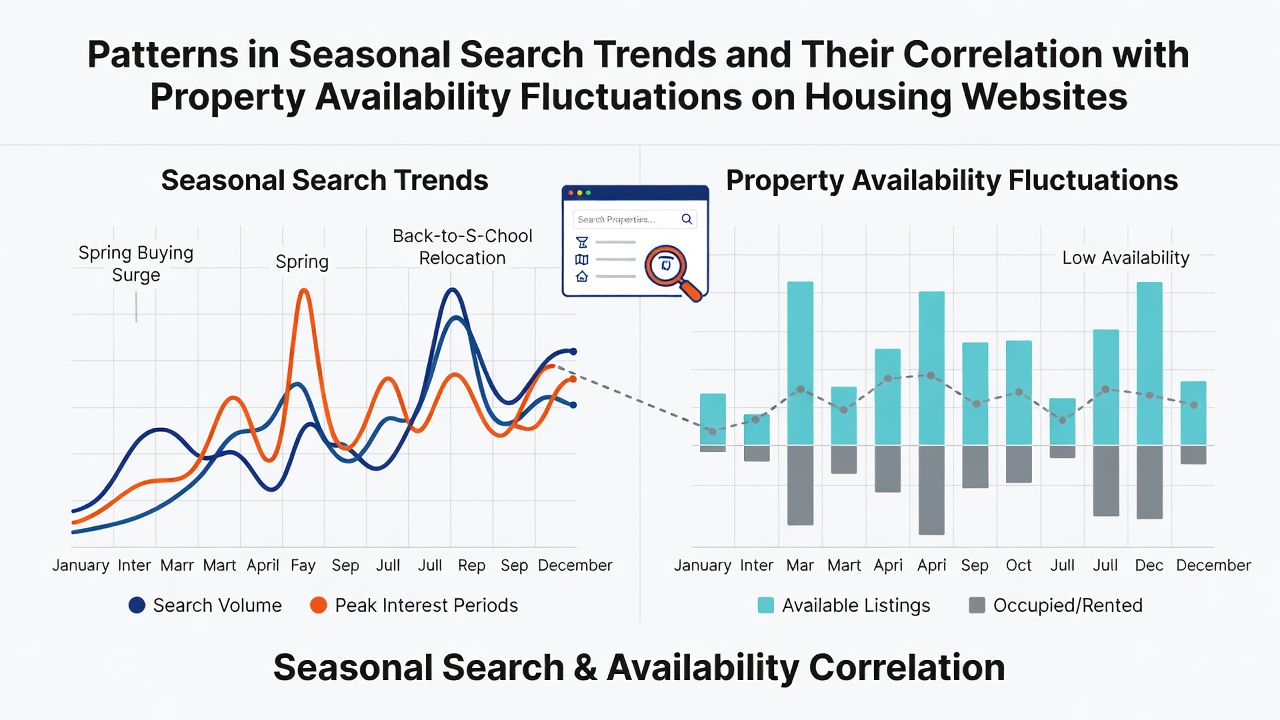
Seasonal search trends on housing websites follow predictable cycles that align closely with shifts in property availability, and researchers have documented these patterns through analysis of user query data and listing inventories from major platforms. Spring months typically see increased search activity as people begin planning moves before the start of the school year, while availability expands because homeowners list properties after winter holidays; this alignment creates measurable correlations tracked by industry analysts over multiple years. Data from the U.S. Census Bureau shows that housing market activity rises notably between March and June, with search volumes on residential platforms reflecting similar increases that precede peaks in new listings by several weeks.
Understanding the Core Seasonal Cycles
Winter periods bring reduced search activity on housing sites, and property availability contracts as sellers delay listings until spring, yet observers note that certain urban markets maintain steady interest because buyers target investment opportunities during slower months. Summer searches climb again after the initial spring surge subsides, and availability fluctuates as families finalize moves before fall; analysts connect these movements to school calendars and weather patterns that influence both buyer intent and seller timing. Studies from academic institutions indicate that these cycles repeat annually with minor variations tied to economic conditions, and platforms record higher query rates for family-sized homes during April and May compared to January adn February.
Data Patterns Across Regions
Regional differences emerge clearly in the data, with coastal markets showing sharper spring spikes in searches that correlate with rapid increases in available listings, whereas inland areas experience more gradual shifts throughout the year. Canadian housing reports from Statistics Canada reveal parallel trends where search interest in major cities rises in tandem with new property uploads during warmer months, and analysts track these movements through aggregated platform metrics that highlight the lag between query increases and inventory growth. European data sources similarly document how holiday periods affect both search behavior and listing volumes, creating predictable troughs in December followed by rebounds in the new year.
October 2026 data points collected from several housing platforms indicate that search volumes for properties with outdoor space remained elevated into early fall in many areas, and availability adjustments followed as sellers responded to sustained interest before winter set in. This timing aligns with broader observations that search trends often anticipate availability changes by two to four weeks, allowing platforms to adjust recommendation algorithms based on historical correlations.
Key Factors Driving the Correlations
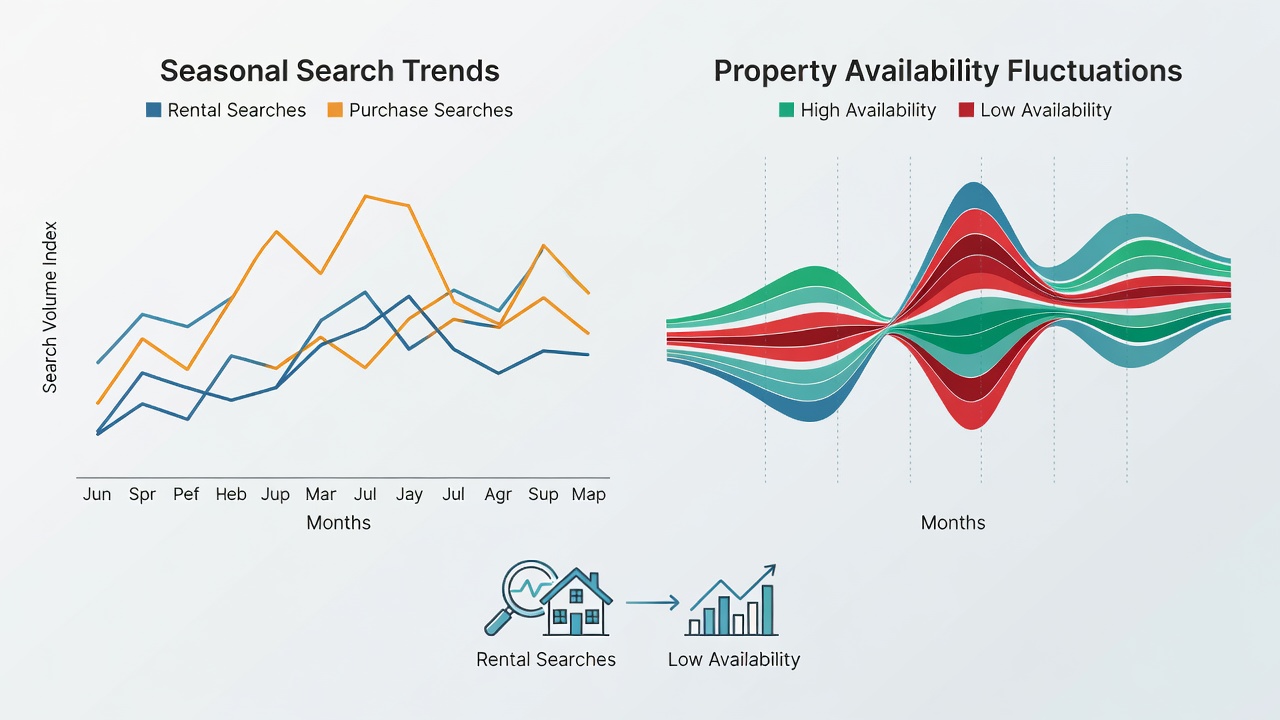
Weather conditions influence both buyer searches and seller decisions, and researchers link warmer temperatures to higher platform engagement that precedes listing increases by consistent intervals. Economic indicators such as interest rate announcements also shape these patterns, with data showing that rate changes in one quarter affect search intensity and availability the following season. Platform algorithms incorporate these seasonal signals to surface listings when user interest peaks, and this integration helps match supply with demand more effectively across different markets.
School year schedules create another layer of influence, and families conduct targeted searches for homes near specific districts during late winter and early spring when availability begins to rise. Industry reports from the Australian Bureau of Statistics confirm that these demographic factors produce measurable upticks in queries that track closely with new property uploads in suburban zones. Observers further note that holiday periods disrupt the usual flow, producing temporary dips in both searches and listings that resolve once routines resume.
Platform Responses and Algorithm Adjustments
Housing websites adapt their interfaces and recommendation systems to account for these recurring patterns, and developers use historical search data to predict when availability will expand in particular categories. This approach allows sites to prioritize certain listings during high-interest periods while reducing visibility for properties that typically see lower engagement in off-peak months. Analysts examine these adjustments through case studies that compare search volumes against actual listing changes across multiple years, revealing consistent lead times between trend shifts and inventory movements.
Take one analysis from a research institution that examined five years of platform records and found that spring search increases reliably preceded availability surges by an average of three weeks in suburban markets, and similar patterns held in urban centers with only slight variations. Those who manage housing websites apply these insights to optimize server resources and marketing campaigns, timing promotions to coincide with expected rises in both user activity and property uploads.
Conclusion
Overall, the documented correlations between seasonal search trends and property availability fluctuations provide housing platforms with actionable information for resource allocation and user experience improvements, and ongoing data collection continues to refine these understandings across different geographic areas. Researchers maintain that economic, demographic, and environmental factors interact to sustain these cycles, and platforms that monitor the patterns achieve better alignment between user queries and available listings throughout the year.